Anyway, back to the question at hand - Why old books?
It is in the old books that we find out that our struggles are not new to our here and now. James Baldwin, in a LIFE Magazine piece in 1963, was quoted,
He added to that thought,
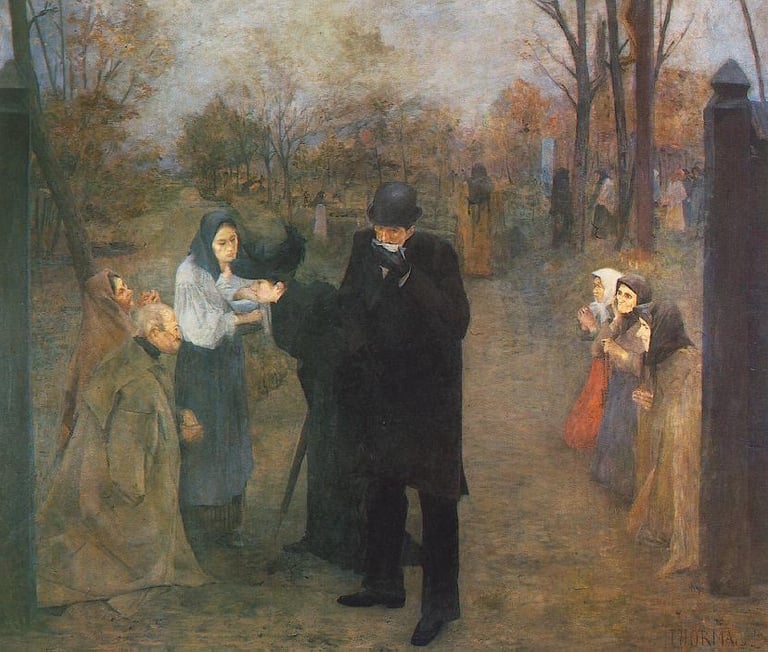
An “old” book carries a very important human story. Someone wrote it, someone read it, someone owned it, someone loved it or hated it, and maybe someone was inspired by it. Even the old books that “don’t age well” are still valuable in the eye of a reader who reads not only to find connection to good stories, but who finds anthropological value in the words and worlds of the past. They help maintain the human connection and narrative to people who have struggled or thrived before our time.
So we know why we read the authors and their works from before our time, but why, in an age when everything is almost entirely available on the internet in a compact, portable, digital form, would anyone bother to actually own a physical, in the hand, old book?
Vintage books provide a multitude of gifts, but two very important ones: one, that they are beautifully crafted objects, with many containing art plates, stylized printings, leather covers; and a second gift, vintage books are objects previously treasured, owned, kept, not discarded. Of course there are so many other values of vintage books, like special introductions, lost translations, original manuscript editions, etc, etc.
But for today let’s direct our light on one of these gifts that a vintage book bestows - ownership.
Charles Lamb offers a helpful thought,
Vintage books carry their own story - of ownership. Why did someone purchase it, keep it and hopefully read and re-read it? Inscriptions, bookplates, notes, page marker ephemera, all give life to what is really just an inanimate object with, in theory, nothing to offer but ink printed on a page!
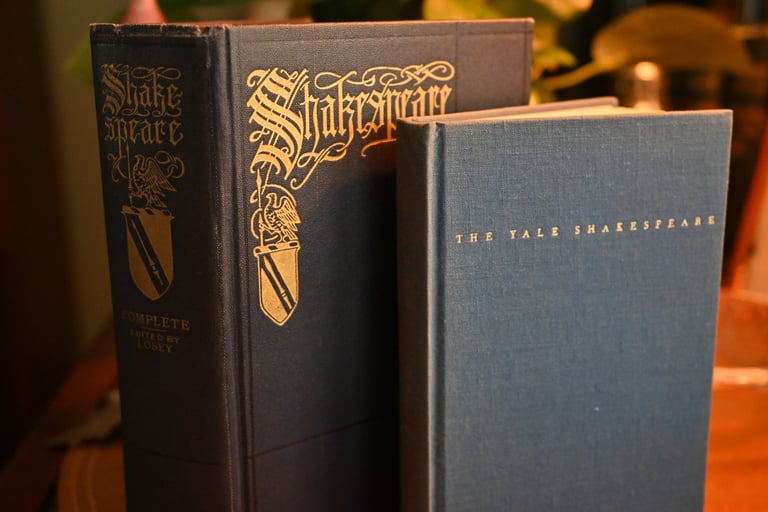
A few collections of Shakespeare fill my library shelves, but two collections in particular carry a story that make them more than just printed pages.
My first real “vintage” book I ever owned was my Grandfather’s book of Complete Shakespeare which he acquired for a college course in 1950. It’s a 1926 edition published by the John C. Winston Company with an introduction by Frederick D. Losey. My grandfather was studying to be an engineer, and I had the feeling growing up that he actually never read from the book after completing the course. But for him the book was a symbol of some kind of achievement, having been the only college educated sibling from his family, just owning it meant something. He was proud to pass it on to me. Though he had no real literary interest in Shakespeare, he knew he was passing on something considered important.
I often read from this collection and find that the personal connection to the book heightens the already fulfilling experience and enjoyment of reading Shakespeare’s words. Perhaps that’s what owning vintage books provides, a sense of human, tactile connection to a singular object?!
Unlike my Grandfather’s Shakespeare collection, my collection of Yale Shakespeares came from the “vintage consumer shopping mall” that is - Ebay!
A late night aesthetic purchase of a set of complete Yale Shakespeares were quickly on their way to my home after clicking “Buy”. But it was upon receiving them that my understanding of owning vintage books changed. The seller/owner sent a little note - these books had been bought, singly each year, by her grandfather for her mother growing up who was now too aged to enjoy them and hoped that they would find a good home.
My whole thought on vintage books evolved with that note. My heart awoke to the great task book owners have of being custodians to the books they shelter in their libraries while they are able. No longer were these just Yale Shakespeares, they were books given from parent to child - sold to a child and parent. They now are read by my own daughter and will be passed down for as long as our custodianship endures.
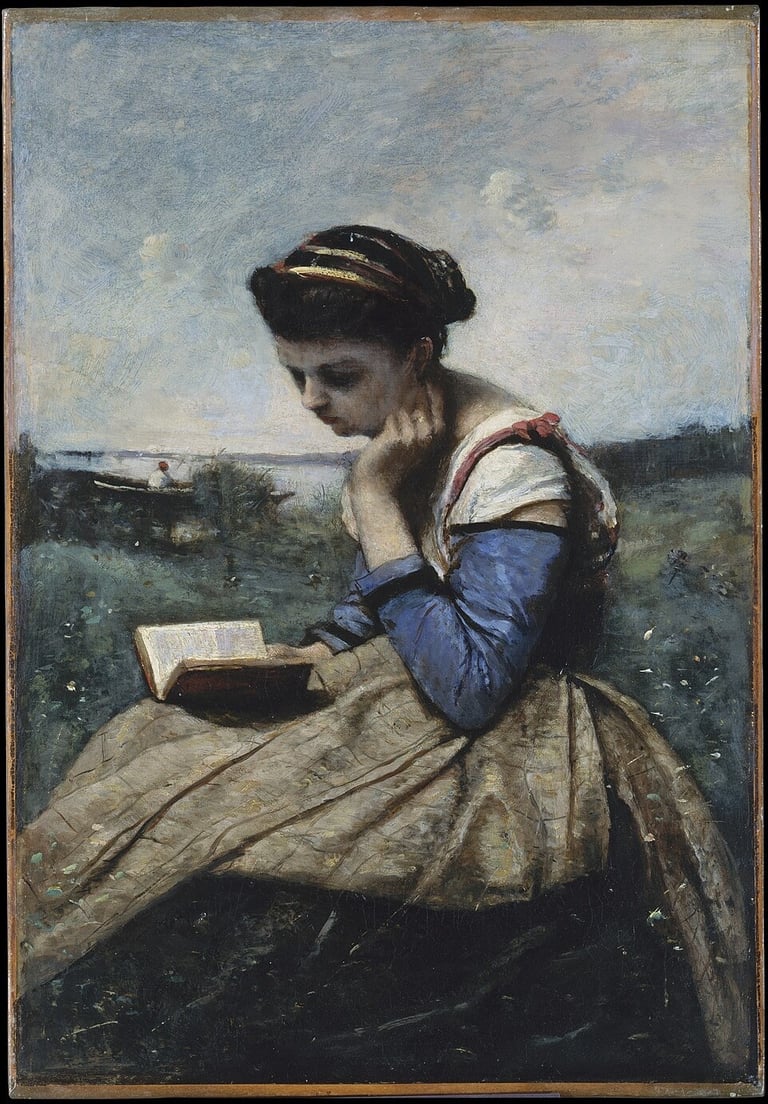
A Woman Reading, Jean-Baptiste-Camille Corot, 1869, Metropolitan Museum of Art, New York
Reading old books is what connects us to the past. It makes us functioning, complete human beings, ones who know their history, engage in the present and keep an open mind for the future. We can find a commonality with the people who came before us in the good and the bad of life. We realize someone saw and felt, back then, what we may be experiencing today.
Perhaps the fact that we still print books, and purchase and own old books, must mean we still need to satisfy an innate human need to have a tactile experience that connects to our heart and soul. We naturally attach a variety of emotions to objects, and often a book can be that important object, new or old!
I hope you have enjoyed my first “Thursday Reflection” post! It has been a great one to write and share and I hope that you too can take a moment to reflect on why you read, and if you read old books, why as well! Please do comment with your thoughts/reflections if you feel inclined.
Many thanks for reading and spending a bit of time with me today!
Brittany